Technology
TECHNOLOGY


FREQUENTLY ASKED QUESTIONS
About Mission Critical Materials
Expand 
What is Mission Critical Materials (MCM)?
Mission Critical Materials (MCM) is a U.S.-based company focused on recovering rare earth elements and other critical materials from environmental waste streams. Our mission is to strengthen U.S. supply-chain resilience while turning legacy environmental liabilities into strategic domestic assets.
What problem is MCM solving?
The United States is fully dependent on foreign sources—primarily China—for heavy rare earth elements like dysprosium (Dy), terbium (Tb), and yttrium (Y). These materials are essential for defense systems, advanced manufacturing, and energy technologies, yet the U.S. currently lacks domestic production.
Acid Mine Drainage (AMD)
Expand
What is Acid Mine Drainage (AMD)?
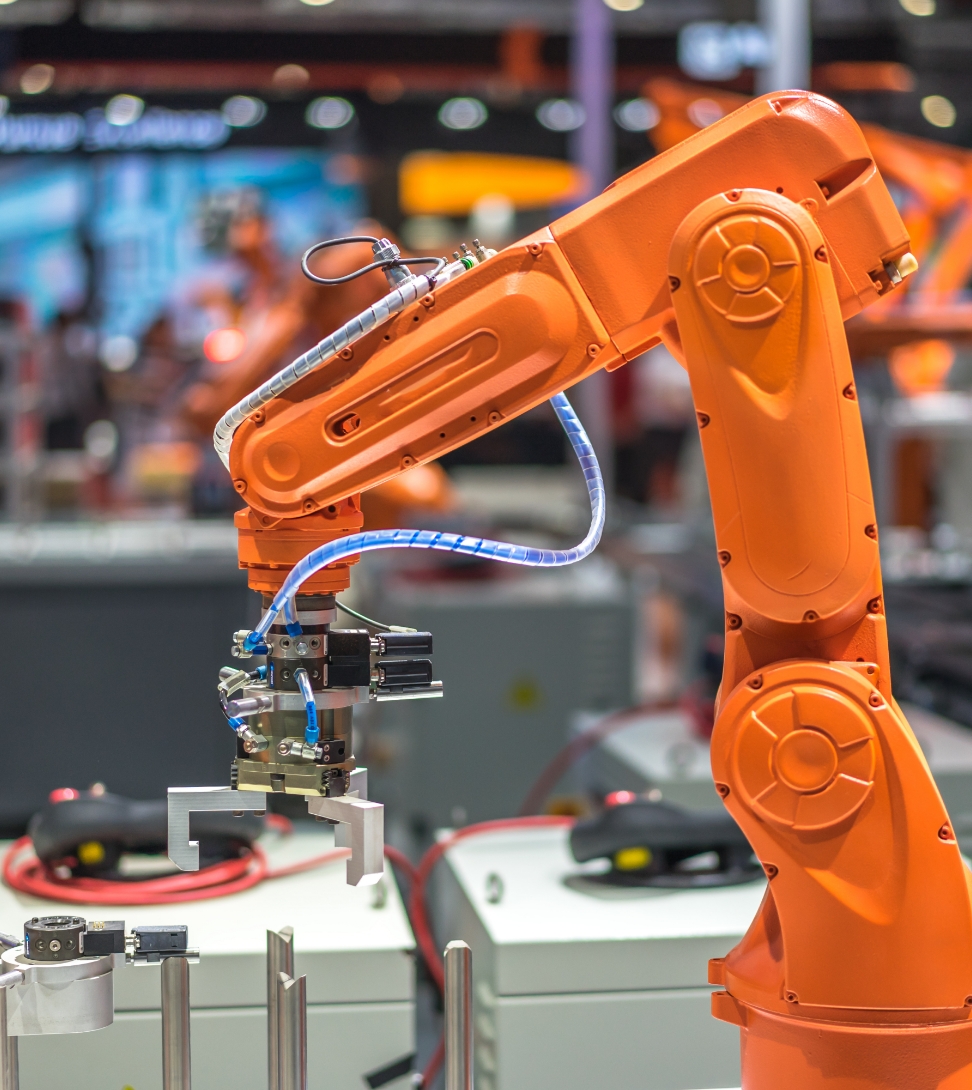
AMD is acidic water generated when sulfide-bearing rocks are exposed to air and water during mining. It is a long-standing environmental challenge across many U.S. mining regions and must be treated indefinitely to protect waterways.
Why does AMD contain rare earth elements?
Rare earth elements naturally occur in coal seams and surrounding geology. Over time, AMD leaches these elements into solution—often concentrating heavy rare earths at levels far higher than conventional mined ores.
Is AMD considered waste or a resource?
Historically, AMD has been treated purely as waste. MCM’s approach reframes AMD as a strategic secondary resource—recovering valuable materials while still meeting or exceeding environmental treatment requirements.
Technology & Process
Expand
How does MCM recover rare earths from AMD?
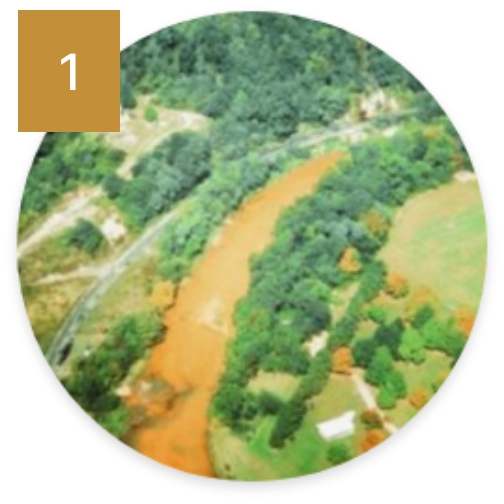
MCM deploys advanced chemical and physical processing techniques to selectively capture rare earth elements from AMD during treatment. The process integrates seamlessly with existing AMD remediation infrastructure.
Does this technology replace AMD treatment?
No. AMD treatment remains mandatory. MCM’s process enhances treatment by recovering rare earths as part of remediation—without increasing environmental risk.
What rare earth elements does MCM focus on?
MCM prioritizes strategically important heavy rare earth elements—especially dysprosium (Dy), terbium (Tb), and yttrium (Y)—while also recovering neodymium and praseodymium (NdPr).
How is this different from traditional mining?
Traditional mining requires excavation, tailings disposal, and permitting for new operations. MCM’s process operates on existing waste streams, with a far smaller environmental footprint and faster deployment timeline.
National Security & Strategic Importance
Expand
Why are heavy rare earths critical to U.S. national security?
Heavy rare earths are essential for permanent magnets, radar systems, precision guidance, propulsion, and advanced electronics used across U.S. defense platforms.
Where do heavy rare earths come from today?
The vast majority of heavy rare earths come from (or are processed) in China. Today, the U.S. is >95% dependent on imports of Dy, Tb and Y.
How does MCM support U.S. supply-chain resilience?
By producing domestically sourced rare earth materials from U.S. waste streams, MCM reduces reliance on foreign supply chains and geopolitical adversaries.
Is MCM aligned with U.S. government priorities?
Yes. MCM’s work aligns with Department of Defense and Department of Energy priorities focused on critical materials, domestic manufacturing, and environmental remediation.
Environmental & Community Impact
Expand
Is MCM’s process environmentally safe?
Yes. The process is designed to improve water quality, reduce long-term treatment burdens, and comply with all federal and state environmental regulations.
Does this create new waste streams?
No new hazardous waste streams are created. Residual materials are managed within existing AMD treatment and disposal frameworks.
How does this benefit local communities?
Communities benefit through improved water quality, reduced long-term remediation costs, skilled local jobs, and economic revitalization of legacy mining regions.
Will AMD sites be expanded or disturbed?
No. MCM prioritizes already impacted, permitted sites and does not require new mining or land disturbance.
Scale, Commercialization & Partnerships
Expand
Is this technology proven?
Yes. The underlying technology has been developed and validated through multi-year research, pilot, and demonstration programs in collaboration with U.S. universities, national laboratories, and federal agencies.
Can this scale to meaningful production levels?
Yes. AMD exists at hundreds of sites across the U.S., offering a scalable, distributed feedstock capable of supporting industrial-scale rare earth production.
Is MCM’s acid mine drainage (AMD) technology applicable outside the United States?
Yes. AMD occurs globally wherever sulfide-bearing ores have been mined. The underlying geochemical processes that concentrate rare earth elements in AMD are not unique to the United States, making the technology applicable worldwide.
Who are MCM’s partners?
MCM collaborates with midstream processors, downstream manufacturers, academic institutions, industrial processors, and federal agencies to enable a complete domestic supply chain—from recovery to refined materials.
Economics & Long-Term Vision
Expand
Does rare earth recovery reduce AMD treatment costs?
Yes. Recovering valuable materials can offset treatment costs, improving the economics of long-term remediation.
What is MCM’s long-term goal?
MCM’s goal is to establish a nationwide network of AMD-based recovery hubs feeding U.S. separation, metallization, and manufacturing facilities—creating a resilient, end-to-end domestic supply chain.
Is this a short-term solution or a permanent one?
AMD flows persist for decades. This makes AMD-based recovery a long-duration, reliable domestic resource rather than a one-time opportunity.


GLOSSARY OF TERMS
AMD
Acid Mine Drainage
AMDREE™
Acid Mine Drainage Rare Earth Element (technology developed by WVU)
CM
Critical Minerals
MTPA
Metric Tons per Annum
REE
Rare Earth Element
HREE
Heavy Rare Earth Element
LREE
Light Rare Earth Element
TREE
Total Rare Earth Elements
REO
Rare Earth Oxide
MREO
Mixed Rare Earth Oxide
TREO
Total Rare Earth Oxides
DOD
US Department of Defense (aka DOW – US Department of War)
DOE
US Department of Energy
DOI
US Department of Interior
EPA
US Environmental Protection Agency
WVDEP
WVU Department of Environmental Protection
Latest News:
West Virginia Executive: Another Man’s Treasure

Function: Dy improves the high-temperature performance and thermal stability of permanent magnets, allowing them to retain magnetic strength under extreme operating conditions.
Applications: High-temperature permanent magnets, Defense motors and actuators, Precision guidance and control systems, Advanced propulsion and actuation components
Why it Matters: Dy is used in very small quantities but is critical to system reliability. Substitution options are limited in high-performance applications, and supply disruptions can have outsized impacts on defense and industrial systems.
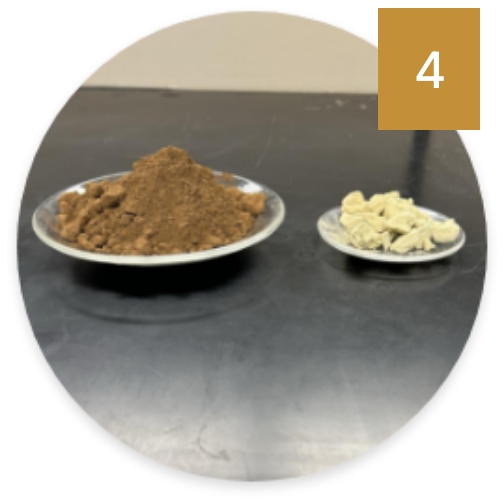
Function: Y improves the performance and durability of advanced materials used in electronics, optics, and high-temperature applications.
Applications: Sensors and detectors, Advanced optics and imaging systems, High-temperature ceramics, Specialty electronics and phosphors
Why it Matters: Y plays a critical role in precision and reliability across advanced systems. Supply reliability is essential for electronics and defense applications where performance margins are tight.

Function: Tb enhances magnetic coercivity and thermal resistance, enabling magnets to maintain performance in demanding thermal and mechanical environments.
Applications: High-coercivity permanent magnets, Advanced electric motors, High-reliability defense and industrial systems, Specialty magnetic alloys
Why it Matters: Tb is one of the most supply-constrained rare earth elements. Although used in trace amounts, it is essential for maintaining magnet performance where failure is not acceptable.
Function: Nd provides the primary magnetic strength in permanent magnets, enabling compact, lightweight, and energy-efficient designs.
Applications: Permanent magnets, Motors and generators, Actuators and control systems, Advanced industrial equipment
Why it Matters: Nd is foundational to modern magnet technology. While more abundant than heavy rare earths, secure and traceable supply remains essential for domestic manufacturing and system reliability.
Function: Pr is commonly alloyed with Nd to optimize magnetic performance, thermal behavior, and durability.
Applications: Permanent magnet alloys, High-performance motors, Advanced manufacturing components, Specialty metallurgical applications
Why it Matters: Pr complements Nd in high-performance magnets, improving overall system efficiency and reliability. Consistent supply supports downstream manufacturing and advanced materials production.